domingo, mayo 24, 2009

Tendencias de uso de aplicaciones VoIP en móviles3G.

Released: March 17, 2009.
Mobile app´s user trends.
Zogby Research


Worldwide, consumers still perceive wide gap between their computers and mobile devices; want greater control over mobile experience

Zogby survey of U.S., Japan, Spain and U.K. mobile users shows most do not currently download applications to mobile devices; Skype calls for greater collaboration between carriers, software providers and device makers to assist consumers in embracing next generation of mobile experience


The beginning.

LUXEMBOURG, March 17, 2009 -

Skype published data today from a recent Zogby survey showing that most mobile users still perceive a gap between the purpose and controllability of their computers versus their mobile devices. This gap correlates with the finding that the vast majority of mobile users do not yet download applications to their mobile devices.

However, the same people expressed a strong desire to be able to choose mobile applications for themselves, and not have their carriers decide what applications they can use. The results also indicated that people will pay more for a device that will allow them to control the applications.

The study surveyed approximately 3,000 mobile users in four markets -- the U.S., U.K., Japan and Spain - between December 2008 and February 2009. Highlights of the findings include:

  • 62% do not yet view their mobile device as an extension of their computer.
  • Only 23% feel that they have more or the same level of control over their mobile device as they have over their computer.
  • 70% have never downloaded an application to their mobile device.
  • 67% want to be able to choose their mobile applications for themselves, rather than have their carriers choose for them.

Regional Breakout: Spain Leads the Way

When the results are broken out by market, regional differences emerge. In Japan, the U.S. and the U.K., respondents felt the least control over their mobile devices versus personal computers (67 percent, 78 percent, 65 percent, respectively), which correlates to few users downloading applications to their mobile devices (22% in Japan, 26% in the U.S., and 28% in the U.K.)

The results from Spain, however, paint a different picture, one that hints at what happens when mobile consumers are given more control. In that market, more than half of the respondents felt there was no difference or they had more control over their mobile devices (53%) as they have over their computers (46%). Nearly half (47%) view their mobile devices as extensions of their computers. Given these attitudes, it is perhaps not coincidental that nearly half of Spanish mobile users (48%) have downloaded applications to their devices, a much larger percentage than the other markets surveyed. And, a much larger percentage of Spain's mobile users - 50% - are willing to pay more for a mobile device that allows them to control their applications.

The Age Gap: Younger People Less Likely to View Mobile Devices as Merely Phones

The survey results also indicate that younger adults have a different view of what a mobile device is than their older counterparts. When asked if they view their mobile device as a phone to make calls on, a computer to access the Internet and download applications, or both, younger respondents were less likely to consider their mobile device to be just a phone. For example, in Japan, respondents under 30 were more likely to view mobile devices as a computer, or both (50%) than view them as merely phones (47%), while only 1 in 4 respondents in that market between the ages of 50 and 64 shared a similar view.

"These results show that work could be done to continue to blur the line between the computer and the mobile device, and that advances in new Internet-based services and mobile devices will help drive innovation. Overall, people want the ability to have control over which applications they download and this is consistent with trends in other industries," said Chad Bohnert, VP Marketing and E-Commerce at Zogby International.

"This is a clear call to action for all of us in the communications industry - carriers, device manufacturers, and software companies like Skype - to work together to deliver what the mobile consumer, especially the next generation of device and data plan buyers, obviously want and expect," said Scott Durchslag, Chief Operating Officer of Skype. "Together, we can bring a rich PC-like communications experience to mobile devices - one that combines voice, video, presence, instant messaging, and file sharing. In doing so, consumers win, and so does the industry as it fuels growth in data minutes and revenues."

To answer mobile consumer demand, Skype is focused on delivering more choice, value, and functionality to the billions of mobile devices in the market today. In recent months, Skype now offers mobile applications for a wide range of operating systems, including Android, Windows Mobile, and Java-enabled phones, and is now available on more than 100 devices from LG, Motorola, Nokia, Samsung, and Sony Ericsson. In addition, the 3Skypephone, available from Hutchison Whampoa's wireless subsidiary 3, has been used to make more than 300 million Skype-to-Skype calls.

About Skype

Founded in 2003, Skype is revolutionizing the way people communicate around the world. Skype has more than 405 million registered users globally who use Skype software to communicate for free through voice and video calls as well as instant messages. Skype generates revenue through its premium offerings, such as calls made to and from landlines and mobiles, voicemail, call forwarding, and SMS. Skype is used in almost every country on Earth, and people have made more than 100 billion minutes worth of free Skype-to-Skype calls. Conversations over Skype can take place on computers, mobile devices and Skype CertifiedTM hardware. Skype certifies and sells hundreds of hardware products from more than 50 partners, and works with hundreds of third-party developers who have created plug-ins to extend Skype's functionality.

Skype is an eBay company (NASDAQ: EBAY). Learn more and download Skype at www.skype.com.


Copyright 2009 by Zogby International.

COPYRIGHT © 2007 DePapaya.com
Reproduction in whole or in part, without written permission is prohibited.
All rights reserved.

jueves, mayo 21, 2009

Enchufes/Computadoras a $99 dólares.


BITS BLOG.
Plugging In $40 Computers
By Saul Hansell.
May 21, 2009, 7:45 am


What would you do with a $40 Linux computer the size of a three-prong plug adapter?


Marvell Technology Group is counting on an army of computer engineers and hackers to answer that question.

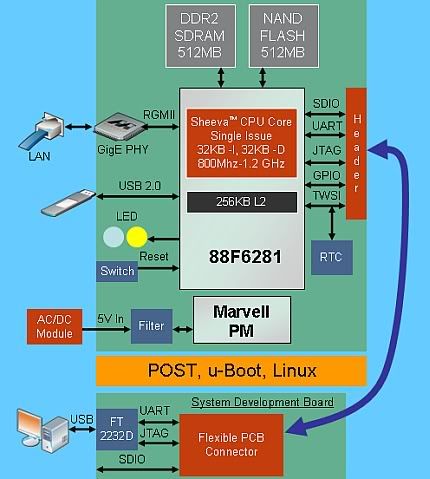
It has created a "plug computer." It's a tiny plastic box that you plug into an electric outlet. There's no display. But there is an Ethernet jack to connect to a home network and a USB socket for attaching a hard drive, camera or other device. Inside is a 1.2 gigahertz Marvell chip, called an application processor, running a version of the Linux operating system.

All this can be yours for $99 today and probably for under $40 in two years.


Sheeva Plug.

"There's not much in there," said Sehat Sutardja, Marvell's chief executive and co-founder, just a few chips and the sort of power supply used to charge a cellphone battery. Because this computer uses chips designed for cellphones, it uses far less power than chips designed for regular computers.

In its 13 years of existence, Marvell Technology Group has become a major player in semiconductors, with annual sales of more than $2 billion a year. It makes more than half of the microprocessors that control hard disk drives and is also a supplier of chips that go into cellphones.

Mr. Sutardja envisions an explosion of innovation about to hit home users because of the combination of open-source software and very powerful chips that are becoming available at very low costs.

The first plausible use for the plub computer is to attach one of these gizmos to a USB hard drive. Voila, you've got a network server. CloudEngines, a startup, has in fact built a $99 plug computer called Pogoplug, that will let you share the files on your hard drive, not only in your home but also anywhere on the Internet.

"This creates a smart data center for the home," Mr. Sutardja said.

Another application might be to connect a security camera to the Internet, adding enough intelligence to help analyze images to distinguish between a stray dog and a cat burglar.


Sheeva Architecture.

Scientific American asked some "alpha geeks" at the Massachusetts Institute of Technology's Computer Science and Artificial Intelligence Laboratory what they might do with a plug computer. One researcher imagined a system to automatically turn on and off appliances as people moved around the house. Another described a "life filter" that might weed out boring e-mails before sending them on to his computer.

Ultimately, these computers may well be used in more mainstream devices, especially for home entertainment.

"We wanted to seed the thinking of people in the market place with what you can do with our processors," Mr. Sutardja said. "Eventually you won't see the plug. We want this device to be in your TV, your stereo system, your DVD player."

The Marvell chips are based on designs by ARM Holdings, which have emerged as the leading rival to Intel's x86 chip architecture. ARM dominates the cellphone market because of its chips' low power usage. ARM licenses its designs to Marvell and many other chipmakers. A year ago, Warren East, the chief executive of ARM, predicted what would happen when the price of ARM's processors fell from the $10 range to 50 cents. At that level, every light switch may well be an Internet connected computer, he said.

The plug computer idea is clearly a step in that direction. And it is part of an even broader array of chips designed initially for phones that will add features to many other devices.

Mr. Sutardja talked about the sort of digital photo frame you can now buy for about $50. Add $2 in chips, and it can display high definition movies, he said. Another $2 adds a camera. And less than a dollar adds several microphones.

"You now have the sort of video conferencing that corporations buy for much more money," he said.

Not surprisingly, in Mr. Sutardja's view, it is the sort of brain that Marvell makes that will be in the center of all this.

"The uses of an application processor are endless," he said. "It is up to smart people to imagine what it can do."


miércoles, mayo 06, 2009

Exito con Innovación

Abril, 2009.
Made in Ecuador
Por Elisa Sicouret


Dos ecuatorianos desarrollaron uno de los software gratuitos más descargados del mundo y crearon su exitosa empresa, Palo Santo Solutions.

Édgar y José Luis Landívar

A lo mejor los creyeron locos cuando, en 1998, los hermanos Édgar y José Luis Landívar (34 y 32 años respectivamente) decidieron abandonar sus trabajos nada menos que en el gigante tecnológico Hewlett Packard para regresar a su natal Ecuador. Diez años más tarde, ellos han demostrado que despedirse de Silicon Valley para volver a casa no fue tan descabellado.

Expertos en Ingeniería Eléctrica y Computación, estos guayaquileños se fueron a estudiar y a probar suerte en los Estados Unidos a inicios de los '90. HP contrató a Édgar como consultor y le ofreció un puesto fijo a José Luis, que se graduó en el MIT de Boston. Como si hubiesen tenido una bola de cristal, ellos previeron que el boom de las punto.com no se sostendría por mucho tiempo y fue así que en sus escasos ratos libres empezaron a planificar lo que un año más tarde se haría realidad: su propia compañía, Palo Santo Solutions, con sede en Guayaquil.

Palo Santo ofrece soluciones tecnológicas para pequeñas y grandes empresas. Al inicio vendían paquetes de Linux, Unix y Asterisk, una aplicación de software libre para centrales telefónicas a través de internet (tecnología conocida como Voz sobre IP o VoIP).

Estos programas eran absolutas novedades en el incipiente mercado informático de Ecuador y es por eso que "al principio nadie entendía bien lo que vendíamos", cuenta José Luis. "Fue difícil sembrar la idea. Presentamos los productos en algunas ferias tecnológicas y las personas nos preguntaban: 'Bueno, ¿cuánto cuesta el computador?' o '¿Viene con impresora?'. Fue un poco frustrante al principio".

El primer año facturaron menos de 50 mil dólares, pero para el 2008 sus ventas alcanzaron el millón de dólares. ¿El secreto detrás del acelerado crecimiento? Los Landívar notaron que Asterisk y otros productos de su clase no tenían un formato amigable y tampoco se amoldaban a las distintas necesidades de las empresas. Así que, junto a su equipo técnico compuesto netamente por expertos ecuatorianos, adaptaron el software de Asterisk para que fuera capaz de satisfacer las necesidades específicas de cada cliente. El resultado fue Elastix, uno de los software gratuitos de voz sobre IP de mayor crecimiento en el mundo, que ha sido traducido ya a 19 idiomas y cuenta con más de mil 500 descargas diarias. En varias ocasiones ha superado incluso en downloads a su principal competidor, TrixBox.

"Actualmente nos visitan usuarios de 197 países y tenemos presencia de distribuidores en lugares como Estados Unidos, Canadá, Polonia, España, entre otros", dice José Luis. La ventaja de este producto frente a las centrales tradicionales, PBX, es que, a través del computador, conecta las líneas telefónicas que se deseen, sin que haya que pagar licencias por cada extensión adicional. Tampoco requiere de tarjetas especializadas para las centrales. Entre sus clientes más importantes están la Presidencia de la República del Ecuador, el Ministerio de Transporte de Bolivia, Usinas y Transmisiones Eléctricas de Uruguay y Rhino Technologies de Estados Unidos.

Palo Santo brinda consultorías para el uso de Elastix a un valor de 65 dólares la hora y tienen clientes en lugares remotos como Pakistán o Rusia, a quienes asisten vía chat. Han complementado el software con una consola especial para Elastix y los paquetes de las centrales fluctúan entre mil 500 y 100 mil dólares. "Ahora ofrecemos cursos oficiales de capacitación y certificación Elastix en Madrid, Ciudad de México, Bogotá, Lima, Quito y Miami", cuenta Édgar.

Aunque la crisis financiera mundial continuará azotando duramente en el 2009, los hermanos Landívar creen que para Palo Santo será un buen año. "Al ser soluciones telefónicas que no necesitan licencias de ningún tipo, creemos que nuestro producto tendrá un repunte importante", afirma José Luis. De hecho, tienen previsto facturar alrededor de un millón 800 mil dólares, un 80 por ciento más que el año anterior.

Pero las cifras no son lo que más motiva a estos expertos. Para ellos, ser reconocidos a nivel mundial como un negocio 100 por ciento ecuatoriano es una meta por lograr. "Yo creo que todavía no se identifica a Elastix como una solución ecuatoriana, aunque de vez en cuando algunos sí se sorprenden de que sea un producto de Ecuador. Hay que trabajar en eso", dice Édgar.


Más información

www.elastix.org
www.palosanto.com


COPYRIGHT © 2007 DePapaya.com
Reproduction in whole or in part, without written permission is prohibited.
All rights reserved.

sábado, mayo 02, 2009

Análisis finaciero de Verizon indica que no necesitan el iphone en sus planes.


BITS BLOG.
Verizon's Results Show It Doesn't Need the iPhone.
By Saul Hansell
April 27, 2009, 4:20 pm


Verizon's financial results, released Monday, underscore a point I made last week: AT&T needs the iPhone more than Verizon does, so it has more incentive to outbid its rival to keep the exclusive deal.

Verizon is certainly playing it cool. In a conference call with analysts on Monday, Dennis Strigl, Verizon's chief operating officer, responded noncommittally to a USA Today report about talks with Apple. "We're always open to discussions with any supplier," he said, according to ZDNet. "We have no announcements to make relative to Apple today. Historically we haven't been dependent on any one device."

And indeed, the company's wireless division is doing just fine. It added a net 1.3 million customers in the first quarter. It added 1.0 million customers, when you deduct business lines and prepaid accounts.

By contrast, AT&T added a net 1.2 million wireless accounts in the quarter, of which 875,000 were consumer postpaid. Of those, 640,000 were iPhone users who didn't already have AT&T accounts.


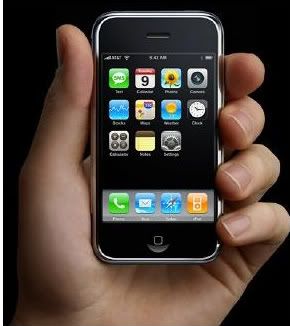
iphone.

In other words, Verizon is growing faster without the iPhone than AT&T is growing with it. And new iPhone users represent three-quarters of AT&T's net new accounts.

Verizon probably does have a significant interest in dragging on negotiations as long as possible.

Not only does that have the potential to frustrate AT&T, but it also gives Verizon the most opportunity to assess the appeal in the market of the Palm Pre and the next crop of phones using Google's Android and Microsoft's Windows Mobile operating system.

If the market for smartphones continues to be wide open, with innovation coming from a lot of corners, Verizon doesn't need to bid up to win the iPhone. Indeed, the better other smartphones are, the lower the iPhone's value will be to AT&T as well.

On the other hand, if consumers start to form a distinct preference for Apple's vision of handheld computing and communication, as they did for its iPod media player, the value of the iPhone soars.

Another unanswerable question is the regulatory environment once the cellphone companies switch over to their new fourth-generation networks. Then it will be technically possible for a single phone to switch from AT&T to Verizon or vice versa. Whether the government will allow companies to cut exclusive deals then is not clear.


COPYRIGHT © 2007 DePapaya.com
Reproduction in whole or in part, without written permission is prohibited.
All rights reserved.

Twitter y Yammer aumentan la productividad de las empresas ?


BITS BLOG.
Will Microblogging at Work Make You More Productive?
By Claire Cain Miller
October 21, 2008, 11:11 am


On Tuesday, The Times published an article I wrote about Twitter and Yammer,two microblogging services that let users blast short messages to a group of virtual followers.

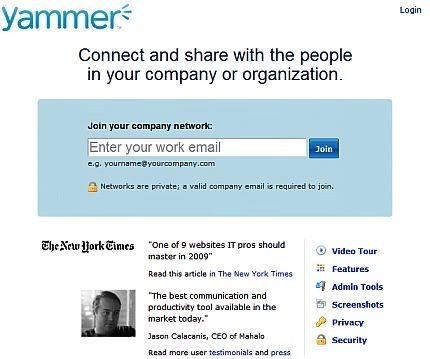
Twitter has gotten a lot of buzz since it was created in 2006. Yammer is new on the scene, just six weeks old, with a different goal: to be Twitter for businesses.

Yammer was created for employees of Geni, a family tree Web site. When they discovered how useful it was for them, David Sacks, the founder of Geni, decided to spin Yammer off into its own company with $1 million of Geni's venture funding. Mr. Sacks, a PayPal co-founder, now runs both start-ups and is raising a new round of funding for Yammer.

On Twitter, people write about the important and the mundane, like, "At school and debating whether I should have more coffee." With a workplace focus, Yammer will not deal in such trivialities, Mr. Sacks said. "People don't want to hear from their friends five times a day about what they're doing. But they do want to hear from their co-workers five times a day about what they're working on," he said.

The central question on Twitter, "What are you doing?" is transformed on Yammer to, "What are you working on?" There are other features specific to the office. Unlike Twitter, which limits users to 140 characters, Yammer's users can type as much as they want and reply to specific messages. They can attach photos, documents or videos. Yammer also has user profiles and will soon add groups, so people can have conversations that other employees cannot see. It has plans to include vendors or consultants outside the company network. Users can check Yammer and post updates from the Web, instant message services or phones.

And just why do we need this when e-mail and instant messaging do similar things?

E-mail no longer serves its proper purpose, which is to request an active response, Mr. Sacks said.


All the rest of the stuff that clogs in-boxes — mass e-mails sharing a link to an article, for example, or notifications of company events — makes e-mail less efficient. He wants to move all that to Yammer.

Mr. Sacks believes that Yammer can rise above all that. "If we're successful, ultimately people will see e-mail and I.M. as simply delivery channels for Yammer content," he said.

On a recent day at Yammer, for example, one employee sent around a link to an article about a new social networking experiment at Yahoo. The company's lawyer wrote that he was working on employee stock option agreements and several employees responded with questions about the options package. Someone announced that the catered lunch menu included California rolls and chicken kebabs.

Yammer is free for anyone with a company e-mail address. Mr. Sacks hopes that it spreads within companies and catches the eye of the higher-ups. At that point, a worried I.T. employee or executive usually calls Yammer and asks about the security features. Those include limiting the I.P. addresses that can read a company account, requiring passwords, cutting off ex-employees and removing certain messages. Once a company administrator takes over, Yammer charges $1 per user per month.

Mr. Sacks hopes to skirt the I.T. department and empower employees. "Instead of the most jaded person about new technology in the company making the decision, the most forward-thinking person in the company can do it," he said. People are itching to use the Web tools they use at home in the office, he said, and this is a way to speed the process. It also saves Yammer money on an expensive enterprise salesforce.

Some people have complained that this strategy is tantamount to blackmail, Mr. Sacks said, because it forces companies to sign up to control it since their employees are already using it. He disagrees — an I.T. department can always block Yammer's Web site, he pointed out.

In the first six weeks, 60,000 users have signed on, and 4,000 of them have convinced their companies to pay. People at Cisco Systems, Xerox and Hewlett-Packard use it. Mr. Sacks has received calls from a farm equipment supplier with thousands of remote sales reps, a motion picture company that already has 400 employees using Yammer and a casino company that has 25,000 employees in other countries.

Yammer is a new way to do a lot of stuff we already do at work. Social enterprise software like Clearspace from Jive Software and SharePoint from Microsoft offer some of these features. Companies already use Twitter and Facebook to communicate with co-workers. For many years, instant messaging has been solving a lot of the problems that Mr. Sacks has with e-mail.

What do you think? Do workers need a new way to communicate? Or will Yammer be yet another inbox to keep up with in an already cluttered digital world?


COPYRIGHT © 2007 DePapaya.com
Reproduction in whole or in part, without written permission is prohibited.
All rights reserved.