lunes, julio 06, 2009

Nuevo Router WiFi Dlink DIR-685. Tan completo cómo enloquecedor.

State of the Art
A Router So Complete, and Vexing
By DAVID POGUE
Published: July 1, 2009

Stuart Goldenberg

Even before someone coined the term "mashup," mashups were popular in the technology world. Some are made in heaven, and are now standard pairings: clock+radio, refrigerator+freezer, cellphone+camera.

Others are still on the early-adopter fringe: TV+Internet, camera+Internet, fridge+Internet.

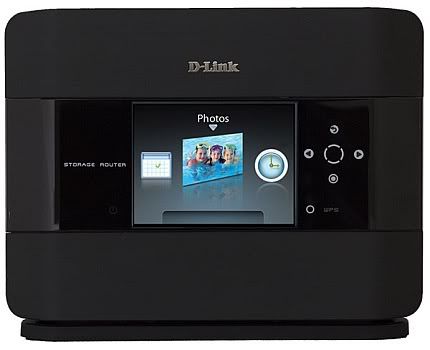
This month, D-Link, the networking equipment company, will offer a mashup that nobody's ever tried before: wireless router + home backup hard drive + digital picture frame. That, in a nutshell, is the D-Link DIR-685 ($300 list price).

The 685's heart is in the right place. Its inventors have noticed that our high-tech homes are becoming cluttered with network-related gadgets and their associated cable creep. As long as people are going to buy all these different network gadgets, D-Link figures, why not combine them into one?

It's the right idea. Unfortunately, D-Link is the wrong company to make it a reality.

First, the good news: once you get the 685 set up, it works very well indeed. It broadcasts your Internet connection wirelessly — a fast, strong Wi-Fi signal (802.11n). This single router turned my entire house into a Wi-Fi hot spot, thanks to its ability to blast through floors and walls. I was even getting three bars of signal (out of a possible four) all the way upstairs.

Every conceivable home router feature is on this machine's configuration screens: port forwarding, Application Rules, individual Web site blocking, a sophisticated firewall, UPnP, Multicast Streams, Wake on LAN, users and groups, network access lists, scheduled lockouts, logs, security formats like WPA and WEP, remote management and much, much more. (And no, I'm not going to define those. If you're among the geeks D-Link is apparently courting with this router, you know perfectly well what those things are.)

But you can get a much less expensive router with those features. The 685's selling point is that it has some unique tricks up its sleeve.

One of them is a tiny (3.2 inch) color screen. It's useful for inspecting the router's settings, but it can also display dozens of Internet information widgets: weather, New York Times headlines, stocks, sports scores, stocks, Twitter posts and — delightfully — photos from your Flickr or Facebook accounts. It's as if your router is now a Chumby, if you remember that desktop gadget.

(Too bad you can't make the screen show you exactly what other people in the house or office are downloading or reading online. Now that would be an interesting feature.)

The 685's case is so attractive (its antennas are concealed inside), and its widget feature is so cool that you might be tempted to set the thing on your desk and glance at its parade of Internet info-bits throughout the day. Unfortunately, nobody will do that; this thing has a really, really loud fan. If you're close enough to the router to see your photos and widgets, you're also close enough to be driven mad by its jet-engine whirring. Bedroom placement is out of the question.

The 685 also has a slot on the side for a hard drive, which is not included. That's O.K.; that way, you can buy your own hard drive online, in the capacity you desire. (Shop for a "2.5-inch SATA" hard drive.) Once you click it into place, the router's screen offers you the chance to format the hard drive, and you're off and running.

Why would you want a hard drive in your Wi-Fi base station? Because now it's a NAS drive (network-attached storage), which is geek-speak for "a hard drive that every computer in the house can access at once, wirelessly."

For example, the whole family can use it as a backup hard drive. You can use it as a central storage repository for files that everybody needs — including, intriguingly, your whole family's iTunes music collection. That's right: put your iTunes folder on this drive, and now all computers can play whatever music is in it. The router's name shows up at the left side of the iTunes window as if it's an iPod, which is very cool.

You can even teach the 685 to download BitTorrent files in your absence. That's right, software pirates, you can have it download huge TV and movie files even while you and your laptop are out of the house. You have to know the Web address of the file you want, and you have to paste that into the router's extremely technical configuration pages in your Web browser. But once you do that, you can go away, confident that the downloaded files will be on the D-Link's hard drive when you return.

The cherry on top is a feature called SharePort. It lets you connect a U.S.B. scanner, hard drive or printer — and once you do, any Mac or PC on the wireless network can use it.

All of this is great, right? So what's the problem?

User-friendliness is the problem. Frankly, you'd have better luck figuring out how to fly the Space Shuttle.


The frustration begins with the bright orange sticker that's been slapped across the network jacks on the back. The sticker says "STOP — Do not proceed until you've run the setup software CD."

What's wrong with that? Three things. First, it's directing you to work through a multistep, complex, user-hostile procedure — wiring the D-Link router to a PC that already has a wired Internet connection, then running the pointlessly protracted installation software — that's actually unnecessary. The router works just by plugging it into power and your modem.

Second, the setup software CD works only on Windows — no Macs or Linux, thank you. D-Link doesn't mention this limitation on the box, on the setup sheet or even on the CD itself.

Third, when you finally try to remove the orange sticker, it shreds, leaving gummy residue and paper fragments precisely where they shouldn't be: in the Ethernet jacks.

It goes on. For example, the Quick Start sheet instructs you to connect a cable to the router's WAN port — but that port is not identified anywhere. There are five identical featureless and unlabeled Ethernet jacks on the router. Which one's the WAN port? Let's play Ethernet roulette!

Above all — and this is the mind-blowing part — D-Link is selling this very complex piece of consumer technology without a single word of instructions for the features that make it unique.

Those cool features like sharing a hard drive, sharing an iTunes library, downloading BitTorrent, connecting a U.S.B. scanner or printer that all computers can share? There's not a single syllable about them in the user guide.

The user guide is a PDF document on the CD — you don't get a printed book, of course — so what would it have cost D-Link to write up these features?

D-Link's PR person suggested that the elusive instructions might be on the company's Web site. (They weren't.) In the end, it took a D-Link product manager a day to figure out how to work these features himself and supply me with the instructions. He says that he'll have them posted on D-Link's Web site by the time the 685 goes on sale. (Caution: They entail mucking around in the router's advanced HTML-based configuration pages. Technophobes need not apply.)

Isn't it amazing that, after all these years, it still hasn't dawned on companies like D-Link that simplicity sells? They still don't get it: spending a little money up front —on hardware design, streamlined software, better manuals — would save a fortune in tech-support calls and store returns.

Not that D-Link is spending much on tech support anyway; my call was answered by clueless agents in a call center who gave me incorrect instructions. And reaching them involves the silliest phone menu in existence. After you dial the technical support phone number listed on the Quick Start guide, the options begin: "For priority VARs, press 9..."

In short, D-Link has gone to the considerable expense of inventing, designing and marketing a smart machine that could save a lot of people a lot of cost and complexity — and then hobbled it by making it much too cryptic and technical for 90 percent of its potential audience.

The DIR-685, in other words, is a very cool mashup — but at the moment, it's also a bit mashed up.


E-mail: pogue@nytimes.com


COPYRIGHT © 2009 DePapaya.com
All rights reserved.

viernes, julio 03, 2009

Firefox 3.5 ya está listo !!

June 30, 2009
Firefox 3.5 Is Live and Downloadable
by Michael Muchmore


After four beta versions and three release candidates, Firefox 3.5 has finally been released into the world as the latest version of the second most popular Web browser on the planet. The new version brings a private browsing mode, faster JavaScript performance, and support for emerging HTML 5 standards such as plug-in-free video and audio playing.

Users can download the new version of Firefoxfor Windows, Mac OS, and Linux in more than 70 languages from www.getfirefox.com.

"So much is happening on the Web right now, it's a great time for browsers. Firefox 3.5 brings together the most innovative Web technologies and delivers them in the most complete and powerful modern browser," said John Lilly, chief executive of Mozilla, in a statement.

Mozilla's Mike Beltzner, who leads the Firefox team, expects the new release to bring the total number of Firefox downloads over 1 billion for all versions.

The browser also includes new technology that will allow users to tell sites their location, which will let sites deliver relevant information, for example, about nearby eateries and businesses. The features uses Google Location Services, which obtains your whereabouts using a database of WiFi access points and other known IP addresses.

Though JavaScript performance is more than twice as fast with the browser's new TraceMonkey engine, it still trails Chrome on benchmark tests performed by PCMag.com. The new video and audio support make use of the Ogg Vorbis and Ogg Theora open source codecs, but these are yet to be adopted by the Web's governing body, the W3C, as official standards.

Abrir artículo en el Browser.
Use of this site is governed by our Terms of Use and Privacy Policy Copyright © 1996-2007 Ziff Davis Publishing Holdings Inc. All Rights Reserved. PC Magazine is a registered trademark of Ziff Davis Publishing Holdings Inc. Reproduction in whole or in part in any form or medium without express written permission of Ziff Davis Media Inc. is prohibited.

COPYRIGHT © 2007 DePapaya.com
Reproduction in whole or in part, without written permission is prohibited.
All rights reserved.

viernes, junio 26, 2009

Las diez preguntas que todo Agente de cambio debe responder.

1:43 PM Thursday June 18, 2009
The 10 Questions Every Change Agent Must Answer
Bill Taylor
Practically Radical


As leaders, we have no control over how fast markets grow or how wisely banks lend. But we do control our own mindsets and "animal spirits"— the phrase coined by John Maynard Keynes in the depth of the Great Depression. If all you've got is a spreadsheet filled with red ink and dire forecasts, it's easy to be paralyzed by fear and resistant to change. But if you can summon some leadership nerve, then hard times can be a great time to separate yourself from the pack and build advantages for years to come.

Indeed, when it comes to creating the future, the only thing more worrisome than the prospect of too much change may be too little change — especially in an economy where there are too many competitors chasing too few customers with products and services that look too much alike. Now is the time to rethink long-held strategic assumptions inside your company, to challenge decades of conventional wisdom in your industry, and to push yourself to learn, grow, and innovate. As Albert Einstein famously said, "Problems cannot be solved at the same level of awareness that created them." Or, in the spirit of some unknown Texas genius: "If all you ever do is all you've ever done, then all you'll ever get is all you ever got."

It's time to do — and get — something different. Here, then, are ten questions that leaders must ask of themselves and their organizations — questions that speak to the challenges of change at a moment when change is the name of the game. The leaders with the best answers win.

1. Do you see opportunities the competition doesn't see?

IDEO's Tom Kelly likes to quote French novelist Marcel Proust, who famously said, "The real act of discovery consists not in finding new lands but in seeing with new eyes." The most successful companies don't just out-compete their rivals. They redefine the terms of competition by embracing one-of-a-kind ideas in a world of me-too thinking.

2. Do you have new ideas about where to look for new ideas?

One way to look at problems as if you're seeing them for the first time is to look at a wide array of fields for ideas that have been working for a long time. Ideas that are routine in one industry can be revolutionary when they migrate to another industry, especially when they challenge the prevailing assumptions that have come to define so many industries.

3. Are you the most of anything?

You can't be "pretty good" at everything anymore. You have to be the most of something: the most affordable, the most accessible, the most elegant, the most colorful, the most transparent. Companies used to be comfortable in the middle of the road — that's where all the customers were. Today, the middle of the road is the road to ruin. What are you the most of?

4. If your company went out of business tomorrow, who would miss you and why?

I first heard this question from advertising legend Roy Spence, who says he got it from Jim Collins of Good to Great fame. Whatever the original source, the question is as profound as it is simple — and worth taking seriously as a guide to what really matters.

5. Have you figured out how your organization's history can help to shape its future?

Psychologist Jerome Bruner has a pithy way to describe what happens when the best of the old informs the search for the new. The essence of creativity, he argues, is "figuring out how to use what you already know in order to go beyond what you already think." The most creative leaders I've met don't disavow the past. They rediscover and reinterpret what's come before as a way to develop a line of sight into what comes next.

6. Can your customers live without you?

If they can, they probably will. The researchers at Gallup have identified a hierarchy of connections between companies and their customers — from confidence to integrity to pride to passion. To test for passion, Gallup asks a simple question: "Can you imagine a world without this product?" One of the make-or-break challenges for change is to become irreplaceable in the eyes of your customers.

7. Do you treat different customers differently?

If your goal is to become indispensable to your customers, then almost by definition you won't appeal to all customers. In a fickle and fast-changing world, one test of how committed a company is to its most important customers is how fearless it is about ignoring customers who aren't central to its mission. Not all customers are created equal.

8. Are you getting the best contributions from the most people?

It may be lonely at the top, but change is not a game best played by loners. These days, the most powerful contributions come from the most unexpected places — the "hidden genius" inside your company, the "collective genius" of customers, suppliers, and other smart people who surround your company. Tapping this genius requires a new leadership mindset — enough ambition to address tough problems, enough humility to know you don't have all the answers.

9. Are you consistent in your commitment to change?

Pundits love to excoriate companies because they don't have the guts to change. In fact, the problem with many organizations is that all they do is change. They lurch from one consulting firm to the next, from the most recent management fad to the newest. If, as a leader, you want to make deep-seated change, then your priorities and practices have to stay consistent in good times and bad.

10. Are you learning as fast as the world is changing?

I first heard this question from strategy guru Gary Hamel, and it may be the most urgent question facing leaders in every field. In a world that never stops changing, great leaders can never stop learning. How do you push yourself as an individual to keep growing and evolving — so that your company can do the same?
Copyright © 2009 Harvard Business School Publishing Corporation.
All rights reserved.
COPYRIGHT © 2009 DePapaya.com
All rights reserved.

martes, junio 23, 2009

5 consejos para la compra de un Notebook.

June 17th, 2009 (7:00am)
5 Tips for Netbook Buyers
Samuel Dean

Netbooks have become a hugely popular hardware category, and I've been using them for more than a year, including trying many of the new models. Making compromises is part of the design of netbooks, so it's important to evaluate them in a hands-on way when you go to buy one. In this post, you'll find five tips for better netbook shopping.


Don't buy solely online.

Buying online can be a great way to get many kinds of systems at the best prices, but I wouldn't recommend shopping solely online when buying a netbook. They're designed to make compromises like the ones discussed below, so it's important to have your hands on the device before you decide that a particular model is right for you.

Keyboard size is critical.

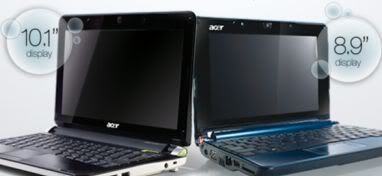
Many netbooks are kept small and lightweight by compromising on keyboard size. Especially if you have big hands, a tiny keyboard can be a major annoyance. The Dell Mini 9 netbooks have good-sized keyboards and are reasonably priced, and the Acer Aspire One systems have nearly full-size keyboards. Many of the Asus netbooks have smaller keyboards.

Pointing devices matter.

Quite a lot of shipping netbooks use trackpads, which annoy some people. Compounding that, the trackpads on some netbooks are set to behave in a hyperactive way, where you can sometimes barely touch them and your cursor will fly somewhere that you didn't intend it to go, or the page you're on will start scrolling unexpectedly. Put in some time playing with a netbook's pointing device before you buy.

How much battery life?

Battery life varies widely among netbooks, but you actually can get some units where the battery will last much longer than notebook batteries do. The new Asus Seashell line claims a whopping 11 hours of battery life. My experience with two previous Asus netbooks, though, is that I get about four hours of battery life if I'm doing tasks that don't involve video and audio, and about 2.5 hours if I am doing video and audio. Think about the applications you use most when evaluating battery life, read reviews, and remember that you can maximize battery life if you turn the brightness down.

Display size.

Netbooks originally came out with tiny 7-inch screens, but the displays have gotten much larger in many cases. However, the displays are typically not very large vertically, so make sure that the display on the netbooks you're evaluating will suit the tasks you want to perform.


Related Posts

Copyright 2001–2008 Giga Omni Media, Inc. All rights reserved.
Design & Marketing consulting by ACS.
Powered by WordPress.com.

domingo, junio 21, 2009

Una "nueva" forma de hacer publicidad.


A New Way to Spread the Word
By ERIC PFANNER
Published: June 21, 2009

Internet-Web2.0


See the video in "You Tube" click here.

PARIS — Travelers at the Liverpool Street Station in London were surprised one morning last January when several hundred of their fellow commuters, instead of scurrying toward the 11:15 train to Southend-on-Sea, started dancing to the sounds of Lulu's "Shout."

A day and a half later the routine, captured by hidden cameras, showed up during a break in the reality television show "Celebrity Big Brother." The seemingly spontaneous performance turned out to have been an advertising stunt for T-Mobile, a wireless telephone network that used it for a campaign built around the slogan "Life's for Sharing."

Sharing is exactly what happened next. While the ad, in its entirety, was shown only once on television, word of it spread via e-mail, blogs and social networks, until it was watched more than 15 million times on YouTube. The spot spawned spoofs and imitators who organized similar events, including one that shut down Liverpool Street Station a few weeks later.

"It seemed to spread a bit of joy at a time when people really needed it," said Kate Stanners, executive creative director at Saatchi & Saatchi London, the agency that created the ad.

The campaign may have cheered up recession-weary Londoners, but it also showed why many people in the media business feel spurned these days. Advertising as it has long been known — television commercials, newspaper ads and the like — is a shrinking part of the marketing equation. What happens elsewhere, mostly on the Internet, is what increasingly matters.

Advertisers did not suddenly wake up to the Internet; they have been shifting growing portions of their budgets online for years. But the popularity of social networking and other Web 2.0 phenomena is helping them use consumers to spread the word for them, allowing them to cut down on paid advertising. While music companies, movie studios and publishers, among others, are trying to figure out ways to get consumers to pay for their content online, advertising is moving in the other direction.

Marcel Fenez, head of the media practice at PriceWaterhouseCoopers, said that during the current economic downturn, a lot of paid advertising would be lost for good, separating this downturn from previous ones, when ad spending recovered relatively quickly. After a 12 percent plunge this year, global ad spending will not climb back to 2007 levels for another five years, Mr. Fenez said.

"It's different this time," he said. "There's obviously some element of cyclical in it, but our belief is that it is largely structural."

Not surprisingly, PriceWaterhouseCoopers's forecasts are gloomiest for newspapers and television, which it expects will suffer from ad spending declines of 16 percent and 11 percent this year, respectively. But even Internet advertising will fall by 2 percent, and it will recover only slowly, the company said.

Some formerly high-flying Internet businesses like MySpace, owned by News Corp., have been brought to earth by the recession. With advertising in decline, the social networking service recently announced plans to cut 30 percent of its staff. Other Web 2.0 businesses, like YouTube, owned by Google, are still trying to figure out how to monetize the vast amounts of traffic they generate.

Amid such a broad-based downturn, the advertising industry has also been hurt, and the mood is sober as representatives from all over the world gather this week in Cannes for an annual get-together. Instead of competing to host the most lavish beach parties, as they have in previous years, agencies are trying to outdo each other with understatement.

Martin Sorrell, chief executive of WPP Group, the world's largest advertising company, calls 2009 a "write-off" for the industry. While marketers are slightly less pessimistic than they were a few months ago, they remain cautious, and a recovery in ad spending is likely to lag behind improvement in the economy, he added.

"While the head and the heart may be better, I don't think that has extended to the hand writing the checks," he said.


Ad agency companies have been cutting jobs and costs, but they have been slightly more insulated than many media owners because they get paid regardless of whether advertisers choose to spend their money on newspapers, television, magazines, radio, billboards or the Internet. Also, companies like WPP and Publicis Groupe, which owns Saatchi & Saatchi, have been expanding their capabilities in digital marketing and other areas outside traditional advertising.

In the past, ad agencies were often paid on commission, as a percentage of advertising sales, but their compensation is increasingly being fixed at hourly rates, as it is for lawyers or accountants. Because digital marketing campaigns are more labor-intensive to develop than ads in traditional media, executives say, this means higher fees.

Advertisers — at least those that can still afford to spend — have also found some benefits in the confluence of a cyclical economic downturn with a structural shift toward free advertising on the Internet. The price of advertising in many paid-for media has fallen, for instance.

Simon Clift, chief marketing officer of Unilever, the consumer products conglomerate, said that on average, the company was paying about 5 percent less for ad space and time than it did last year.

"We've been getting some real bargains and, even better, some real value," he said. "The overriding message of the Internet is that you can do more with less."

How does free advertising look? It can take many forms: Getting a journalist or blogger to review a new mobile phone, placing a video on YouTube, spreading the word via bloggers, and starting a Facebook group dedicated to a brand or product.

Free advertising does not mean the end of the paid kind. As in the case of the T-Mobile campaign, paid advertising can help get the process started. For some things, like burnishing a company's image or stimulating consumers' desire for an expensive pair of shoes, there may be few free options. And new technology will bolster the advertising capabilities of traditional media like television, backers say.

But in the future, none of these things will exist in isolation. Advertising executives have been talking about "integrating" their campaigns for years, with mixed results, but now consumers are doing it for them.

"People have been a bit sloppy with the word advertising," said Richard Pinder, chief operating officer of Publicis Worldwide. "It came to mean spending money on television or newspapers. Actually, I think we're going back to the original meaning of the word, which is to say, I hope that people are aware of my brand and interested in knowing more about it."


COPYRIGHT © 2009 DePapaya.com
All rights reserved.